How do we approach our programs?
Promoting rural mathematics in Uganda requires contextualizing the subject. Because rural schools often lack high-tech resources, the best approaches focus on using locally available materials for hands-on learning, integrating indigenous cultural practices, aligning with national curricula, and incentivizing teachers to make math relevant and enjoyable.
Integrate Ethnomathematics and Local Culture
Connecting Culture to the Classroom: Rural Ugandan children grow up interacting with indigenous games, farming, and trade, all of which are deeply rooted in geometry and arithmetic. Teachers can use local artefacts—like omweso boards, woven baskets, and traditional huts—as tangible manipulatives to teach concepts like fractions, sets, and spatial reasoning.
Implement Low-Cost Activity-Based Learning
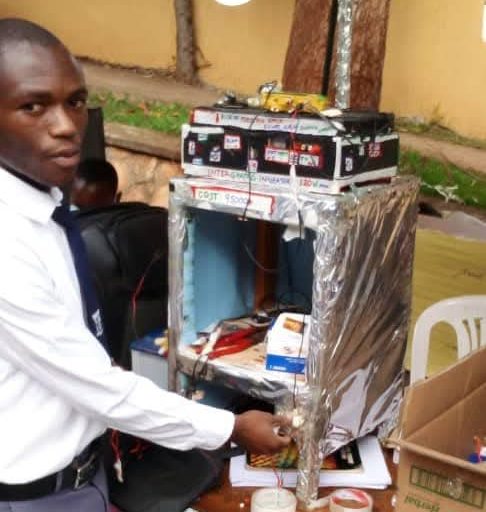
Using Available Resources: Rather than relying on expensive, imported technology, promote the use of locally sourced, affordable materials. Items like bottle caps, sticks, stones, and seeds can be used to teach basic arithmetic and probability, bringing abstract concepts to life.
Interactive Math Clubs
Establish after-school math clubs that focus on games, puzzles, and collaborative problem-solving. These reduce the fear of the subject and foster a positive, communal attitude.
Support and Incentivize Teachers
Continuous Professional Development (CPD): Support educators through workshops that emphasize learner-centered teaching strategies. Teachers need training on how to design practical lessons without relying solely on textbooks.
Always making impact
Success relies on implementing targeted AI tutoring tools, contextualizing math using local, real-world examples, providing multigrade differentiated instruction, and expanding ongoing professional development for teachers.

Leverage language & community
Bilingual Instruction: Children often grasp mathematical concepts better when introduced in their native language before transitioning to English.

Teacher motivation
Research in rural Uganda has shown that performance-based incentive schemes and providing adequate teaching resources can lead to better student attendance and reduce dropout rates.
Training
We bieden regelmatig trainingen en workshops over onderwerpen die relevant zijn voor de branche. Onze gecertificeerde trainers zijn al jarenlang experts op hun vakgebied en kijken er altijd naar uit om met onze klanten samen te werken.

Leverage Adaptive Learning & AI
Integrating adaptive software (such as Edmentum Exact Path) helps bridge achievement gaps by creating custom learning pathways and delivering real-time feedback. Virtual Access: Utilizing virtual tutoring programs ensures students receive high-level instruction regardless of their geographic location.

Alignment with National Frameworks
The New Lower Secondary Curriculum: Implement the National Curriculum Development Centre’s (NCDC) revised Lower Secondary Curriculum, which heavily encourages project-based learning, alternative teaching strategies, and cross-cutting issues like sustainable development.

Parental involvement
Engage parents through community meetings. Explain the practical value of mathematics in everyday life and equip them with simple guides to support their children's learning at home.